What Is PoE? A Complete Guide to Power over Ethernet
Power over Ethernet (PoE) is a technology that allows network cables to carry both electrical power and data to compatible devices. Instead of using separate power adapters and Ethernet connections, PoE uses a single Ethernet cable to simplify installation, reduce cable clutter, and make network management easier.
PoE is widely used in offices, commercial buildings, security systems, and modern networking environments where reliable connectivity and flexible device placement are important.
How Does Power over Ethernet Work?
PoE delivers electrical power through Ethernet cabling while maintaining data communication over the same cable. A PoE-enabled network switch or injector supplies power to a compatible device, such as an IP camera, wireless access point, or VoIP phone.
The two main components are the Power Sourcing Equipment (PSE), which supplies power, and the Powered Device (PD), which receives it. Standard-compliant PoE equipment detects compatible devices and manages power delivery to help prevent damage.
Common PoE Standards
Different PoE standards support different power levels, depending on the equipment and installation requirements.
- IEEE 802.3af (PoE): Provides up to 15.4 watts at the power-sourcing equipment, with up to 12.95 watts available to the powered device.
- IEEE 802.3at (PoE+): Supplies up to 30 watts at the source, with up to 25.5 watts available to the device.
- IEEE 802.3bt (PoE++): Supports higher power levels, including Type 3 at up to 60 watts and Type 4 at up to 90 watts at the source.
Choosing the appropriate standard ensures that connected equipment receives sufficient power for reliable operation.
What Devices Use PoE?
PoE supports a wide range of networking and communication equipment, including IP security cameras, wireless access points, VoIP phones, access control systems, and certain network sensors. Some advanced devices, such as PTZ cameras and high-performance wireless access points, may require higher-power PoE standards.
Benefits of Power over Ethernet
One of PoE’s biggest advantages is simplified installation. A single Ethernet cable can provide both power and connectivity, reducing the need for nearby electrical outlets. This makes it easier to install devices in ceilings, hallways, outdoor enclosures, and other locations.
PoE can also centralize power management through compatible network switches, helping businesses monitor connected devices and use backup power systems more efficiently.
How Far Can PoE Run?
A standard Ethernet channel generally supports up to 100 meters (328 feet), including patch cords. PoE installations typically follow this same distance guideline, although cable quality, power consumption, voltage drop, and environmental conditions can affect performance.
For longer distances, installers can consider compatible PoE extenders, additional network switches, or fiber-optic links with remote power solutions.
Choosing the Right PoE Setup
Before installing PoE, check the device’s power requirements, Ethernet cable category, switch power budget, and supported PoE standard. Cat5e and Cat6 cables are commonly used, provided they meet the installation requirements.
With the right equipment and proper planning, Power over Ethernet offers a practical, scalable solution for modern networks, helping businesses connect and power devices efficiently while keeping installations organized.
Related Projects
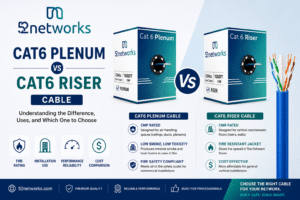
In the world of network infrastructure, the choice of cabling can have a significant impact on the safety, efficiency, and overall performance of a system. Among the various categories of network cables, Cat6 plenum and Cat6 riser cables are two popular options, each with distinct features and intended uses. The...
Read More

blogOctober 9, 2026
What Ethernet Cable Do I Need for 1Gbps, 2.5Gbps, 5Gbps and 10Gbps?
Choosing the right Ethernet cable can make a big difference when you are building or upgrading a home, office, gaming setup, or network infrastructure. Ethernet cables may look similar, but different categories are...
blogOctober 13, 2026
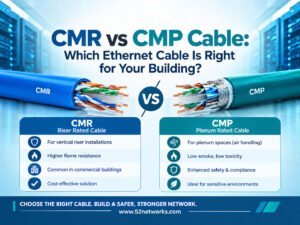
CMR vs CMP Cable: Which Ethernet Cable Is Right for Your Building?
Choosing the right Ethernet cable for a building involves more than selecting Cat5e, Cat6, or Cat6A. You also need to consider where the cable will be installed and which fire-safety rating is required. Two common ratings in...
blogOctober 13, 2026