Solid vs Stranded Ethernet Cable: Which One Should You Use?

When choosing Ethernet cable for a home, office, or commercial network, cable category is not the only factor to consider. The conductor design also matters. Solid and stranded Ethernet cables may look similar from the outside, but they are built differently and are intended for different applications.

Solid Ethernet cable is generally preferred for permanent installations inside walls, ceilings, and cable pathways. Stranded Ethernet cable is more flexible, making it ideal for patch cords that connect computers, routers, switches, and other network devices.

Understanding the differences between solid and stranded Ethernet cable can help you choose the right option for reliable performance, easier installation, and long-term durability.

What Is Solid Ethernet Cable?

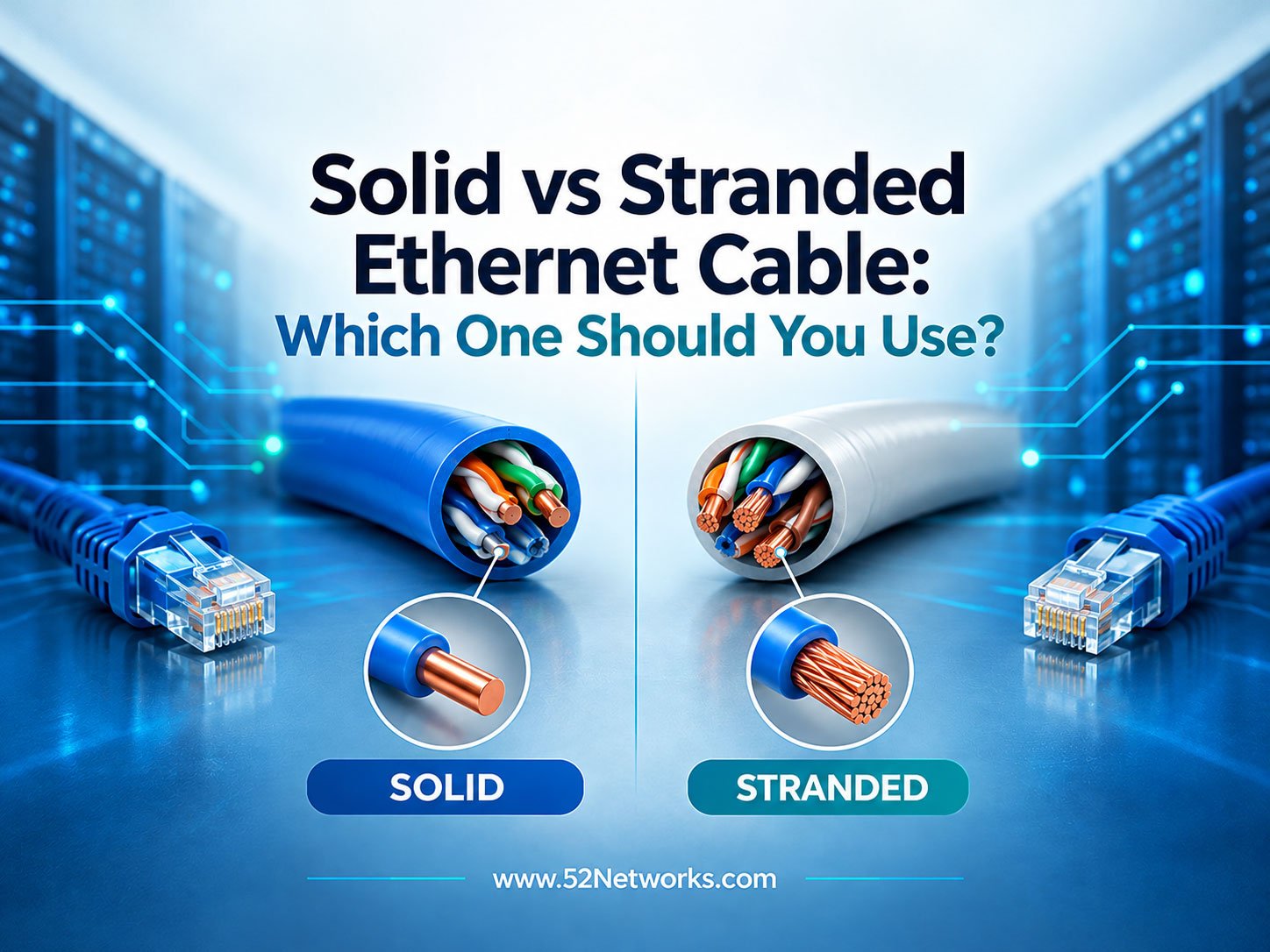
Solid Ethernet cable uses one solid copper conductor for each wire. In a typical four-pair Ethernet cable, there are eight insulated conductors arranged into four twisted pairs.

Because each conductor is made from a single piece of copper, solid cable is relatively rigid and holds its shape during installation. It is commonly used for permanent network cabling in residential and commercial buildings.

Solid copper cable is suitable for long, fixed cable runs when installed within the limits specified for the cable category and Ethernet application.

Common Uses of Solid Ethernet Cable

  • Permanent wiring inside walls and ceilings
  • Structured cabling in offices and commercial buildings
  • Connections between wall outlets and patch panels
  • Network cabling routed through approved pathways
  • Fixed links connecting work areas to telecommunications rooms

Solid Ethernet cable is generally a good choice when the cable will remain in place and will not be moved frequently.

What Is Stranded Ethernet Cable?

Stranded Ethernet cable uses multiple smaller copper strands twisted together to form each conductor. This construction makes the cable more flexible than a comparable solid-conductor cable.

Its flexibility helps it handle frequent movement and bending, which is why stranded cable is commonly used for Ethernet patch cords.

For example, the short cable connecting a desktop computer to a wall outlet or a network switch to a patch panel is often stranded.

Common Uses of Stranded Ethernet Cable

  • Ethernet patch cords
  • Connections between computers and wall outlets
  • Router and switch connections
  • Cables used with movable equipment
  • Short connections that may need to be repositioned

Stranded cable is particularly useful where flexibility and convenient handling are more important than suitability for permanent structured-cabling runs.

Solid vs Stranded Ethernet Cable: Key Differences

FeatureSolid Ethernet CableStranded Ethernet Cable
Conductor designOne solid copper wire per conductorMultiple smaller strands per conductor
FlexibilityMore rigidMore flexible
Best applicationPermanent cablingPatch cords and movable connections
Long fixed runsGenerally preferredUsually less suitable
Frequent movementLess suitableBetter suited
Typical terminationCompatible punch-down jacks and terminalsCompatible plugs and patch-cord connectors
Electrical resistanceGenerally lower for comparable conductor sizeGenerally higher for comparable conductor size
Typical costOften economical for bulk installation cableVaries by cable construction and assembly

Actual performance depends on conductor size, cable category, length, connector compatibility, and manufacturing quality.

1. Performance and Signal Quality

Both solid and stranded Ethernet cables can support high-speed networking when properly designed, manufactured, and installed.

For example, Cat5e, Cat6, and Cat6A cables are available in different conductor constructions. The category rating describes transmission performance, while solid or stranded describes the conductor design.

Solid conductors generally have lower electrical resistance than stranded conductors of comparable overall size. Stranded conductors provide greater flexibility but can have slightly higher resistance.

For permanent network links, solid copper cable is commonly preferred because it works well with structured-cabling systems and provides suitable electrical characteristics for longer fixed runs.

For patch cords, stranded cable is widely used because it can tolerate everyday handling and repositioning more effectively.

2. Flexibility and Durability

Flexibility is one of the clearest differences between the two cable types.

Solid Ethernet cable is stiffer and can be more difficult to route around tight corners or into crowded spaces. Repeated bending or movement can damage its conductors over time.

Stranded Ethernet cable bends more easily and is better suited to connections that may be unplugged, moved, or adjusted regularly.

However, flexibility does not mean a stranded cable can withstand unlimited pulling, twisting, or bending. Both cable types should be handled according to the manufacturer’s minimum bend radius and installation instructions.

For the best results, use solid cable for fixed infrastructure and stranded cable for connections that need regular movement.

3. Cost Differences

The cost of solid and stranded Ethernet cable varies according to category, conductor material, cable length, jacket rating, shielding, and manufacturer.

Bulk solid-conductor cable is commonly used for permanent installations because it can be economical for long runs through a building.

Stranded cable is frequently purchased as finished patch cords, so its price also reflects connector assembly, length, and product quality. Comparing a bulk cable spool with a ready-made patch cord is therefore not always an equal comparison.

When budgeting for a network, consider the complete installation: bulk cable, outlets, patch panels, connectors, patch cords, labor, and testing.

Avoid choosing a cable based on price alone. Look for the required category rating and genuine copper conductors.

4. Installation and Connector Compatibility

Solid and stranded cables may require different termination methods or compatible connectors.

Solid-conductor cable is commonly terminated using insulation-displacement contacts in structured-cabling jacks and patch panels. Stranded patch cords typically use plugs designed for stranded conductors.

Some connectors are rated for both conductor types, but compatibility should never be assumed. Using the wrong connector can create unreliable contacts, intermittent connections, or performance problems.

For permanent wiring, installers generally run solid cable from the telecommunications room to wall outlets. Short stranded patch cords then connect the patch panel to the switch and the wall outlet to the end device.

This arrangement is widely used in structured Ethernet networks because each cable type serves the application for which it is best suited.

5. Solid vs Stranded Cable for PoE

Power over Ethernet (PoE) delivers electrical power and data through Ethernet cabling to devices such as wireless access points, IP cameras, and VoIP phones.

Both solid and stranded copper cables can be used for PoE when they meet the relevant cable, connector, length, and application requirements. However, conductor resistance affects power loss and heat generation.

Because stranded conductors generally have higher resistance than comparable solid conductors, cable quality and specifications deserve particular attention in PoE installations.

Choose compliant copper cable from a reputable manufacturer, follow the device and cable specifications, and consider cable-bundle size and installation conditions. Avoid copper-clad aluminum (CCA) cable for professional structured cabling and PoE applications.

6. Which Type Should You Choose?

The right choice depends on where the cable will be installed and whether it will move regularly.

Choose solid Ethernet cable if you are:

  • Wiring a new home or office
  • Running permanent cables through walls or ceilings
  • Connecting wall outlets to a patch panel
  • Building a structured cabling system

Choose stranded Ethernet cable if you are:

  • Connecting a computer to a wall outlet
  • Connecting a switch to a patch panel
  • Making short router or workstation connections
  • Using cables that may be moved frequently

For most structured installations, a combination of both types provides the best result: solid cable for permanent links and stranded cable for patch cords.

Final Verdict

Solid and stranded Ethernet cables are designed for different purposes. Solid cable is generally the better choice for permanent network wiring because of its electrical characteristics and compatibility with structured-cabling installations. Stranded cable is more flexible and better suited to patch cords and frequently moved equipment.

Before buying, check the cable category, conductor material, connector compatibility, installation environment, and required performance.

As a simple rule, use solid copper Ethernet cable for permanent runs and stranded copper cable for flexible patch connections. Choosing the right construction helps create a reliable network that is easier to install, maintain, and expand.

Leave a Reply

Your email address will not be published. Required fields are marked *


Related Projects